Ideavo is a free AI app builder that turns chat prompts into production-ready websites, mobile apps, and internal tools, with bring-your-own-key model access.
Ideavo has entered a crowded arena of AI application builders, a market where Lovable, Bolt.new, v0.dev, Replit, and Emergent already compete for the attention of founders, product managers, and solo makers. Rather than outspend those rivals on subsidized model credits, the Ideavo team has taken a deliberately different route. The platform itself costs nothing to use, and builders plug in their own API keys or existing subscriptions from OpenAI, Anthropic, Google, OpenRouter, or comparable providers. The result is a full-stack AI app builder that behaves more like a portable development environment than a prompt toy, with an emphasis on code ownership, provider choice, and the ability to ship production-ready websites, mobile apps, internal tools, and games from a single conversation thread.
The company reports usage among employees at Amazon, Microsoft, LinkedIn, Flipkart, PhonePe, Adobe, Google, Notion, Slack, Databricks, Atlassian, and Spotify. That logo wall signals enterprise curiosity more than proven deep deployment, and the accompanying testimonials come from product managers, engineering leads, founders, freelancers, a travel blogger, a marketing head, and even a professor who demonstrates live ideas in lectures. The breadth of that sample is itself a signal: Ideavo is being pitched as a general-purpose construction layer rather than a niche utility for engineers.
This review examines what Ideavo actually offers, how the workflow functions from first login to deployment, where the platform fits across different builder profiles, and what the free positioning genuinely costs in practice. It also weighs the trade-offs that come with a bring-your-own-key model, including setup friction, the absence of published tier pricing for the Agent+ offering, and the difficulty of verifying cross-platform output depth before committing to a project.
What is Ideavo?
Ideavo is a free, AI-powered full-stack application builder that converts natural-language chat prompts into production-ready websites, mobile apps, internal tools, MVPs, dashboards, and games. The platform addresses a specific frustration in the current generation of AI builders: generated code often stays trapped inside a proprietary editor, while model usage carries heavy markups that leave small teams exposed to a vendor's pricing decisions. Ideavo attacks both problems at once by pairing a no-code conversational workflow with bring-your-own-key model access and full code export.
Its audience spans product managers prototyping before a standup, founders validating an idea before fundraising, non-technical creators with a vision but no engineering background, developers who want to skip boilerplate, and agencies that must deliver client work in days rather than months. The company positions the product explicitly as a free Lovable alternative, Bolt.new alternative, v0.dev alternative, Replit alternative, and Emergent alternative. That framing tells a clear story: Ideavo competes on control and portability rather than on bundled model credits, which is a meaningful distinction for anyone who has watched a subscription bill climb alongside a project's complexity.
Key Features
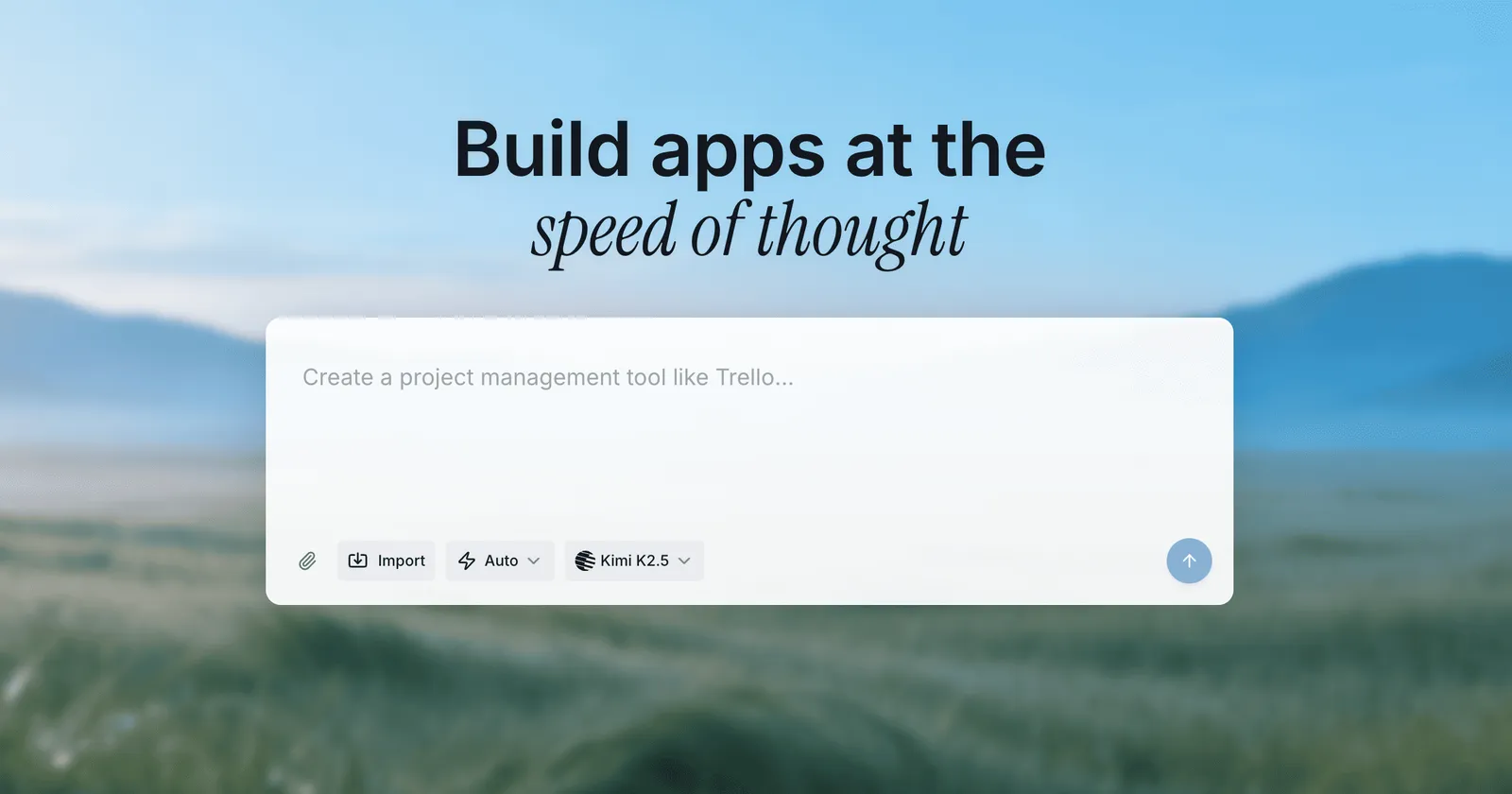
Bring Your Own Key and Subscription Model Access. Ideavo allows builders to connect an existing API key or paid subscription from OpenAI, Anthropic, Google, OpenCode, Kimi coding plans, OpenRouter, or virtually any other provider. Model selection includes entries such as GPT-4o, GPT-4o mini, and o3-mini, and the platform applies no markup on usage, so costs track whatever rate the underlying provider charges. Because several providers maintain free tiers, the effective cost of building inside Ideavo can fall close to zero.
Backend Generated Alongside the Interface. The builder does not stop at front-end scaffolding. Authentication, databases, payments, and business logic are generated automatically while an idea is described in plain language. An MVP therefore arrives with working accounts, persistent data, and transaction handling instead of a static mockup that still needs a server built behind it. For teams that have spent weeks wiring identity providers before writing a single product feature, this is the most consequential capability in the stack.
Any Platform From One Workflow. Web, mobile, and game targets share a single codebase and a single conversation. The site promises zero configuration across these destinations, which matters for small teams that cannot maintain separate repositories for an iOS build, a web dashboard, and a browser game. Consolidating those targets into one project surface removes an entire category of coordination overhead.
Deploy, Import, and Integrate. Existing repositories can be imported into Ideavo, and finished projects export to GitHub. Deployment runs through Vercel, and custom domains can be attached without leaving the environment. The loading sequence of the application even reveals dedicated modules for GitHub, Railway, and Vercel hooks, indicating that the platform is designed to inhabit an existing toolchain rather than replace it outright.
Team Collaboration and Shared Sessions. Teammates can be invited into a workspace, sessions can be shared, and every change becomes visible to everyone involved in real time. This converts the builder into a review surface where designers, engineers, and product managers examine the same artifact simultaneously, which shortens the feedback loop that normally stretches across tickets, branches, and staging environments.
Agents, MCPs, Skills, and Workflows. The product exposes an orchestration layer where parallel agents execute tasks, Model Context Protocol servers connect context-aware tools on the fly, reusable skills load into sessions, and multi-step automation chains run custom workflows. This is the most developer-flavored portion of the offering and clearly separates Ideavo from simpler prompt-to-page generators that stop at a static preview.
Enterprise Grade Controls. Ideavo advertises SOC 2 certification, encryption at rest, full audit trails, and SSO support. Those guarantees push the platform into procurement conversations where a compliance review is a precondition for adoption, and they matter to agencies handling regulated client work.
How It Works
The journey begins on the Ideavo home page, where a single call to action invites a builder to start without a credit card or upfront payment. After signing in, the first meaningful step is connecting a model provider. A settings dialog accepts an API key or completes an OAuth handshake, and the interface surfaces a provider list followed by available models once a credential is validated. Builders who already hold a ChatGPT, Claude, or Gemini subscription can reuse that entitlement rather than purchasing separate credits, which is the core economic argument for the platform.
From that point, a new project opens as a conversation. The builder describes an outcome in ordinary language, and the environment responds by initializing a monorepo, writing a TypeScript configuration, creating a folder structure, and installing dependencies as visible steps. Backend services are provisioned during the same pass, so authentication, data storage, and payment plumbing materialize alongside the interface rather than behind a separate setup task.
Iteration happens through follow-up messages. Each request produces a revision that teammates can observe live, and sessions stay shareable so a colleague can join mid-stream without exporting anything. When the artifact is close enough to ship, the project exports to GitHub, deploys to Vercel, and binds to a custom domain. Teams that already own a repository can reverse the flow by importing into Ideavo first, which suits organizations modernizing an aging codebase rather than starting from a blank page.
For heavier workloads, builders load reusable skills, attach MCP servers for external context, or dispatch parallel agents that work on separate tasks at once. Those automations run as workflows that chain multiple steps together, turning a sequence of manual prompts into a repeatable pipeline. The whole cycle stays inside one environment from first prompt to live URL.
Use Cases
The product manager who needs evidence before the next sprint. A PM with a napkin-level concept can describe the idea, generate a working prototype with authentication and a database, and present something clickable at the following standup. No engineering tickets are required, and the prototype produces real user feedback rather than opinions about a slide. The testimonials on the site specifically highlight this reduction in dependency on development teams as the primary benefit for non-engineering roles.
The founder validating an idea before a fundraise. A solo founder can produce a deployable MVP in a day instead of a quarter, attach a custom domain, and put the link in front of early users. Investors evaluating traction respond differently to a live product than to a mockup, and the export path to GitHub means the underlying code remains an asset rather than a rented artifact. One testimonial describes replacing a two-week sprint with a single session.
The agency compressing client delivery. An agency owner can take on more work without expanding headcount because build costs drop and timelines shrink from months to days. Shared sessions mean a client or an internal reviewer can watch progress accumulate in real time, which cuts the revision cycles that normally consume the back half of a project. Deliverables export cleanly to client-controlled repositories.
The solo builder monetizing a side project. A creator with no coding background can assemble a travel platform, a landing page, or a small paid tool, then iterate based on actual usage. One testimonial describes a travel blogger building an entire platform while having coffee, and another notes that minimal cost paired with maximum output makes Ideavo a practical route to passive income. Free provider tiers keep the operating cost of an experiment near zero until it earns revenue.
Pricing & Value
The headline claim is striking: Ideavo is free to use. The company states plainly that it cannot out-subsidize large AI labs, so model costs pass through to the builder via bring-your-own-key credentials or an existing subscription. No credit card is required to start, and the landing page repeats the promise that building costs nothing. A separate Agent+ destination exists on the site, implying additional paid capability around agent orchestration, though the home page does not publish tier pricing or credit allowances. Readers who need exact numbers should consult Ideavo pricing directly before planning a budget.
The value calculation depends entirely on whether a builder already pays for model access. For someone holding an active API key or AI subscription, the marginal cost of Ideavo is essentially zero, which undercuts subscription-based competitors on economics alone. For a newcomer without credentials, there is setup friction and a variable bill tied to usage. The free tier is genuine, but it is free in the way a workshop is free: the tools are open, and the raw materials are purchased separately.
Frequently Asked Questions
Is Ideavo really free to use? Yes. The platform charges nothing for access. Builders supply their own API key or provider subscription, so costs depend on the model provider selected rather than on an Ideavo subscription, and many providers offer free-tier models that make building effectively free.
How does Ideavo differ from Lovable, Bolt.new, or v0.dev? Ideavo markets itself as a free alternative to each of those tools, emphasizing bring-your-own-key support, no vendor lock-in, code export, and the ability to connect models from any provider. The distinction rests on portability and provider choice rather than on bundled credits.
What kinds of applications can be built? The platform targets websites, mobile apps, internal tools, MVPs, dashboards, and games. Because Ideavo is a full-stack builder, generated projects can include front-end code, backend services, integrations, and deployment configuration rather than interface layers alone.
Can third-party subscriptions and free models be connected? Yes. Ideavo connects API keys and subscriptions from OpenAI, Anthropic, Google, OpenCode, Kimi coding plans, OpenRouter, and other providers. Third-party free tiers are supported, and the available model roster keeps expanding.
Does Ideavo suit enterprises and regulated teams? The platform advertises SOC 2 certification, encryption at rest, audit trails, and SSO support, along with shared team sessions. Those controls address common procurement requirements, though published details beyond the certification claims remain limited. Technical documentation is available at Ideavo documentation for teams that need deeper verification.
Final Verdict
Ideavo makes a coherent bet: that builders care more about owning their code and choosing their models than about receiving a bundle of subsidized credits. The bring-your-own-key architecture keeps platform cost at zero, backend generation shortens the path from idea to something deployable, and GitHub export alongside Vercel deployment means nothing gets trapped. The orchestration layer covering parallel agents, MCP servers, reusable skills, and workflows gives technical users genuine depth beyond conversational prompting, while SOC 2 compliance, audit trails, and SSO make enterprise conversations possible.
The trade-offs are real. Model costs shift onto the builder, which is liberating for anyone already paying for a provider and mildly intimidating for a complete beginner. Nothing on the landing page quantifies the Agent+ tier, so budget planning requires a separate visit, and the single-codebase claims for web, mobile, and game targets remain broad enough that verification demands hands-on testing. Prospective users comparing options can review the Ideavo blog for further context on capabilities and releases.
Overall, Ideavo is a strong fit for founders, product managers, developers, and agencies who already hold model credentials and want maximum control over cost and output. Builders with no existing subscription should expect a short setup detour before the economics become compelling.
Pros & Cons
Pros
- The platform itself costs nothing to use and routes model access through bring-your-own-key credentials or existing provider subscriptions, with no markup added by Ideavo.
- Backend generation covers authentication, databases, payments, and business logic automatically, so generated projects arrive far closer to production than front-end-only scaffolding.
- Code stays portable through GitHub export, repository import, Vercel deployment, and custom domain attachment, which directly counters vendor lock-in concerns.
- An orchestration layer for parallel agents, MCP servers, reusable skills, and multi-step workflows gives technical builders automation depth beyond simple prompt-to-page generation.
- Enterprise-oriented controls including SOC 2 certification, encryption at rest, audit trails, SSO support, and live shared team sessions make the platform viable for regulated and collaborative work.
Cons
- The free model pushes all model costs onto the builder, so heavy usage depends on already holding a paid API key or subscription, which adds setup friction for complete newcomers.
- No concrete tier pricing, credit allowances, or feature breakdown is published on the landing page for the separate Agent+ offering, leaving budget planning unclear.
- Broad claims about shipping to web, mobile, and game targets from a single codebase lack published technical specifics, making output depth difficult to verify without hands-on testing.