Traceback review: reveal No Caller ID and private numbers in 1.3 seconds. See how it works, pricing, and support on every US carrier.
What is Traceback?
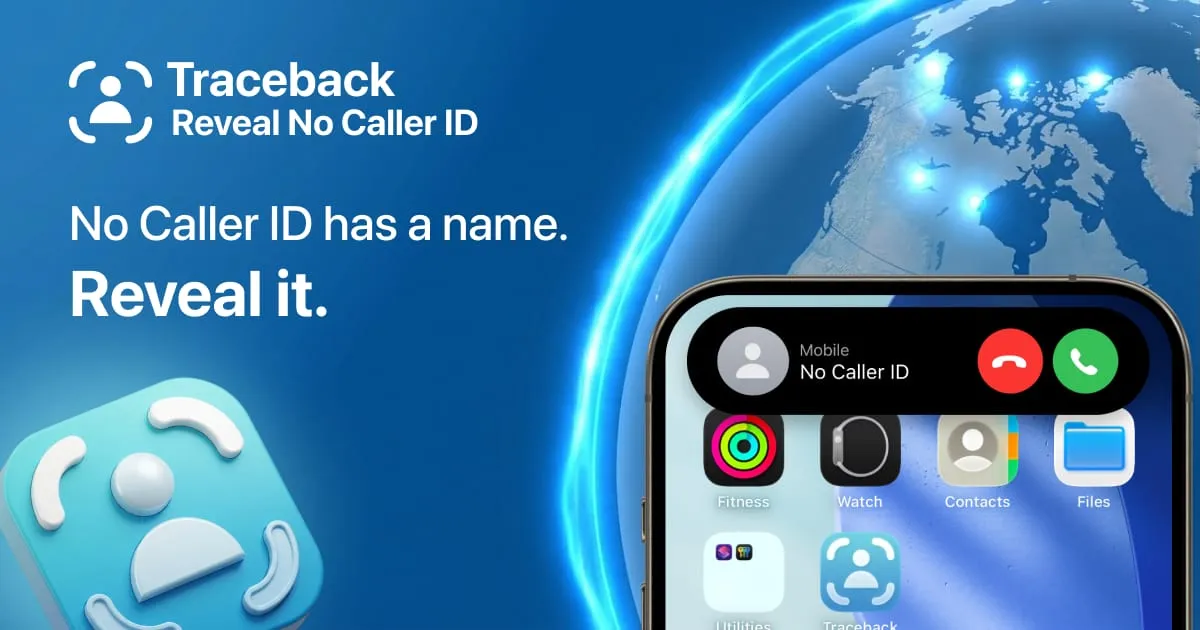
Traceback is a subscription-based phone service that reveals the real number behind No Caller ID, unknown, and private calls on US carriers using conditional call forwarding. The service tackles a pain point that has long frustrated smartphone users: hidden numbers that bypass caller ID and leave people guessing, ignoring, or even harassed. Traceback routes declined or unanswered calls through its reveal server, which returns the caller's actual number, the name when available, and prior call history in approximately 1.3 seconds. It is designed for individuals, small business owners, attorneys, and anyone who receives frequent anonymous calls and wants to know who is on the other end. Compared to legacy solutions like TrapCall, TrueCaller Premium, and RoboKiller, Traceback positions itself as faster, more affordable, and more comprehensive in terms of US carrier support, with a simple one-time setup that works on iPhone and Android.
Key Features
-
Universal US Carrier Support: Traceback claims to work with every major US carrier, including Verizon, AT&T, T-Mobile, and numerous MVNOs like Cricket, Metro by T-Mobile, Mint Mobile, Visible, Boost Mobile, and Straight Talk. The app uses smart carrier detection and one-tap activation, with the entire setup taking about 47 seconds. This is a significant advantage over many competitors that only support select networks.
-
1.3-Second Caller Reveal: After you decline or ignore a No Caller ID call, Traceback automatically routes the call to its reveal server. Within roughly 1.3 seconds, a push notification arrives showing the real phone number, the caller's name when available, and any previous interaction history. This speed is the core value proposition, as it minimizes the anxiety of unknown callers.
-
Police-Ready Evidence Reports: Every revealed call is logged with precise details including a timestamp to the millisecond, caller verification, call duration, frequency charts, and behavioral patterns. These logs can be exported as a PDF or in a police complaint format with one tap, making Traceback a practical tool for documenting harassment or stalking cases. The website notes that law enforcement has accepted Traceback evidence in such cases.
-
Privacy-First Architecture: The service emphasizes that call data is never shared with third parties. All data is encrypted in transit and at rest, stored on the company's own infrastructure, and users can export or delete their data at any time. This is a strong response to privacy concerns that often plague caller ID apps.
-
24/7 Human Support: Traceback provides real human support through chat, WhatsApp, and email, with replies typically within minutes. The website explicitly states there are no bots, scripts, or offshore call centers. This is a differentiator in an industry where automated support is common.
-
Cross-Platform Availability: The service works on iOS, Android, and also offers a web app at trace-back.app. It functions even when the app is closed, as the call forwarding happens at the carrier level. This makes it a set-and-forget solution rather than an app that must be kept open.
How It Works
The user journey starts with a simple signup on the Traceback website or mobile app. The app detects the user's carrier and provides a one-tap activation for conditional call forwarding, which takes about 47 seconds to complete. Once set up, no further action is needed. When a No Caller ID or unknown number calls, the user simply declines the call or lets it ring out. This triggers the call forwarding mechanism: the call is routed to Traceback's reveal server instead of just being terminated. The server extracts the originating number, looks up the caller's name if publicly available, and sends a push notification to the user's device within about 1.3 seconds. The notification includes the real number and any known details. The user can also view a complete call log with history and frequency analytics within the app. Because the process relies on call forwarding, it works even if the app is not running, and the user does not need to interact with the phone beyond declining the call.
Use Cases
-
Harassment and Stalking Victims: Individuals receiving repeated anonymous calls from a harasser or stalker can use Traceback to identify the caller and build a documented history. The police-ready evidence reports can be shared with law enforcement to support restraining orders or other legal actions. The speed of the reveal (1.3 seconds) means they can finally sleep without constant anxiety.
-
Small Business Owners: Owners who use a personal phone for business often get unknown calls from potential clients, but also from spam and robocallers. Traceback helps them screen calls and know whether to pick up. A real estate agent, for example, can see that a missed call was from a potential buyer rather than a telemarketer, allowing them to prioritize callbacks.
-
Sales and Marketing Professionals: For people in sales, every incoming call could be a lead. Traceback turns anonymous numbers into identifiable contacts, so sales reps can prepare before answering and avoid missing important opportunities. The frequency charts also help spot repeat callers who may be genuinely interested.
-
Night-Shift Workers: Employees who sleep during the day are often disturbed by spam or wrong number calls. With Traceback, they can see that a call was non-urgent or from a known spam number without answering, allowing them to maintain healthy sleep patterns.
Pricing & Value
Traceback operates on a simple subscription model with three billing options: a weekly plan at $4.99, a monthly plan at $9.99, and an annual plan at $89.99, which works out to a 25% discount compared to the monthly. Every plan includes the full set of features, so there are no paywalled tiers. The service offers a free 3-day trial before any payment is required, and there are no hidden fees or long-term commitments. In terms of value, Traceback is notably cheaper than competitors like TrapCall, which often charges more for comparable features. For users who receive even a handful of No Caller ID calls per month, the $9.99 monthly fee justifies itself through the time saved and the peace of mind gained. The inclusion of 24/7 human support and police-grade evidence further strengthens the value proposition, especially for those in adversarial situations.
Frequently Asked Questions
How does Traceback reveal a No Caller ID number? Traceback uses conditional call forwarding, a standard carrier feature. When you decline a call, it routes to Traceback's reveal server, which extracts the real number and sends it back to you in about 1.3 seconds. The setup takes about 47 seconds and works on all US carriers.
Does Traceback work with every US carrier? Yes, the service supports Verizon, AT&T, T-Mobile, and every major MVNO including Cricket, Metro, Mint Mobile, Visible, Boost Mobile, and Straight Talk. The app automatically detects your carrier and provides one-tap activation.
Is tracing a No Caller ID call legal? Yes, it is legal in all 50 states. Conditional call forwarding is a standard service provided by carriers, and Traceback only identifies the originating number without recording conversations. The service has even been accepted as evidence in harassment and stalking cases.
Can Traceback reveal calls received before signing up? No, Traceback can only identify calls that happen after you set up the service. Calls received before activation never passed through the reveal server, so there is no data to recover. However, most repeat callers reach out again, and future calls will be identified.
What platforms are supported? Traceback is available as a mobile app for iOS and Android, as well as a web app at trace-back.app. The call forwarding works regardless of whether the app is open, as long as your phone is turned on.
Final Verdict
Traceback is a well-executed solution for a niche but pressing problem: discovering who is behind No Caller ID calls. Its key strengths are the exceptionally fast reveal time, broad US carrier support, detailed evidence logs, privacy protections, and responsive human support. The main limitations are that it only works for calls received after activation, requires a conditional call forwarding setup that some users might find technical, and is exclusively a US-focused service. For anyone in the United States who receives frequent anonymous or private callers, whether for personal safety or professional efficiency, Traceback is a reliable and cost-effective choice. The free trial makes it easy to test without commitment, and the annual plan offers good savings for long-term users.
For more details, you can explore Traceback's pricing page, learn about the team on the about page, or read real stories on the Traceback blog.
Pros & Cons
Pros
- Reveals No Caller ID numbers in about 1.3 seconds, significantly faster than most competing services.
- Compatible with every major US carrier and MVNO, including Verizon, AT&T, T-Mobile, Cricket, Mint, and Visible.
- Generates detailed, timestamped call logs with frequency charts that can be exported as PDF or police complaint format.
- Privacy-first architecture encrypts call data and allows users to export or delete their information at any time.
- 24/7 access to human support via chat, WhatsApp, and email, a rare feature in the subscription service space.
Cons
- Only reveals calls received after activation; cannot retroactively identify previous unknown callers.
- Requires a one-time conditional call forwarding setup that may be unfamiliar for some users despite the 47-second process.
- Service is focused exclusively on the US market, offering no support for international carriers or numbers.